Inferno


Inferno, by Alan Cohen, is an ambitious piece of literary fiction that follows Nancey Reese, a young nurse in 1980s Holyoke, as she stumbles from innocence into something like self-awareness, all while a chatty, self-conscious narrator and his “Doctor” creator keep stepping in to talk about genes, consciousness, and what stories are for. We move between Nancey’s cramped apartment and chaotic hospital shifts, her friendships and near-relationships, and long reflective chapters on genetics and the mind that frame her life as one experiment among many. By the end, Nancey is left standing in an open future rather than wrapped up neatly, the “inferno” of experience still burning but no longer completely opaque.
On one level, there is this very grounded, almost stubbornly ordinary story of a plain young woman who smokes too much, works nights, and learns how to pay rent, navigate a toxic head nurse, cling to a glamorous friend like Susan, and decide what kind of intimacy she can stand. Those scenes feel relatable and authentic. On the other level, the narrator piques interest with intriguing ideas, talking about DNA as “snakes” inside us and consciousness as a new “light” that lets us see our own thoughts. Instead of feeling like a gimmick, it worked for me as a kind of echo chamber. Nancey’s small choices and the essayistic chapters keep reflecting each other, so her drifting, timid, half-woken life sits next to these big questions about how much freedom any of us really have.
What surprised me most was how much the book leans into self-awareness. The narrator reminds readers that he is a construct, trying to tell Nancey’s story under the Doctor’s rules. Then the Doctor himself appears as a character. It sounds clever, but I read it as someone worrying, out loud, about responsibility: to a character, to real patients, to family, to a life you could have lived but didn’t. There were times when the philosophical chapters stretched on, and I wanted to get back to Nancey and Susan or the drama at Mercy Hospital. But even there, I felt the pull of the ideas. The book keeps asking, in different ways, whether we are more than our genes, our conditioning, our old stories. It is curious, sometimes grand, and then suddenly very tender, like when the narrator pauses to wonder what kind of future Nancey should be allowed to have and admits he is still just curious, still compassionate, still vigorous, and cannot walk away from her fate.
By the time I reached the end, with Nancey facing the consequences of her choices and then offered back to the reader as a full-length portrait rather than a closed case, I felt oddly protective of her. It did not feel like a neat moral tale. It felt more like watching someone you know muddle through their twenties in slow motion. The genre is literary fiction, with a strong philosophical streak and a taste for metafiction, so it asks for patience and attention instead of dishing out quick thrills. I would recommend Inferno to readers who enjoy long, idea-driven novels, who are happy to sit with a flawed, sometimes frustrating protagonist, and who like their stories spliced with essays on science and consciousness. If you like the thought of George Eliot arguing with Oliver Sacks inside a hospital drama, you are the right audience.
Pages: 624 | ASIN : B0FTRPQ7NQ

Seeing America Between the Lines
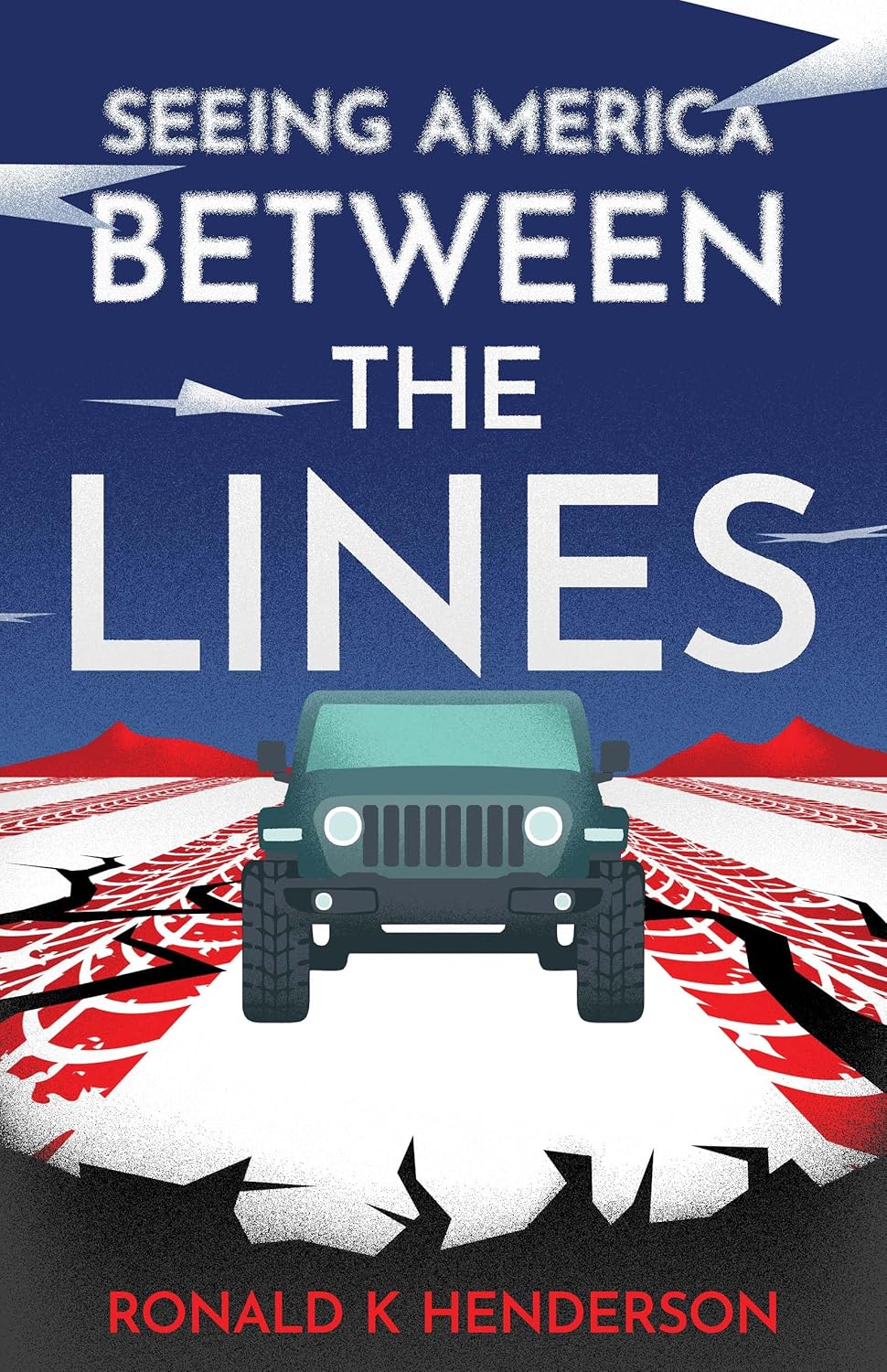
Seeing America Between the Lines follows Ronald K. Henderson as he heads out on the road during a moment when the world around him feels upside down. He drives west from Austin and moves through strange motels, frozen passes, desert highways, childhood memories, and long-buried grief. What starts as a simple road trip slowly turns into a search for clarity, a reckoning with friendship, and a look at an America that feels both familiar and foreign. The mix of travelogue, cultural reflection, and personal unraveling gives the book its heartbeat. It is a story about both motion and stillness.
I was pulled in by the writing right away. The voice is sharp, wry, fed up, and tender all at once. It hits with quick jabs and then pulls back to show a softer center. I enjoyed how the author speaks plainly about big emotions without dressing them up. Some scenes made me laugh because they are so honest about small human ridiculousness. Others hit with a sudden emotional weight that caught me off guard. The language is vivid and loose and full of personality, almost like sitting across from someone who tells a story with both hands and doesn’t worry about smoothing the edges. I liked that a lot.
I also appreciated how the ideas unfold. The book keeps circling questions about who we become when the world stops making sense. It explores disappointment, nostalgia, aging, and the weird ache of watching a country tilt in ways you never expected. The reflection on friendship was really emotional for me. The scenes in Tombstone carry a quiet punch because the place feels mythic, and the grief feels real. The honesty is what got me most. Henderson doesn’t try to look noble. He is just human. And the way he ties the physical road with the emotional one feels true, especially when the miles start to blur, and the heart starts to speak up.
Seeing America Between the Lines reminds you that searching is a normal state of being. It also reminds you that the road can shake things loose that you didn’t know were stuck. I would recommend this book to readers who like memoirs that mix humor with heartbreak, travelers who find meaning in long stretches of empty highway, and anyone who feels a little out of place in modern America and wants to hear from someone who gets it.
Pages: 215 | ASIN : B0G3QTB481
Storytelling and Research

The Nalanda Manuscript follows a former paratrooper who gets pulled into a high-stakes quest to recover a long-lost Nalanda manuscript that mysteriously surfaced in Mali. What first drew you to Nalanda and Timbuktu as the historical anchors of this story?
I was drawn to Timbuktu when I read a National Geographic article about its libraries in 2011. A few months later, Al Qaeda in the Islamic Maghreb invaded Timbuktu. During the pandemic, I read a book by Joshua Hamer — The Badass Librarians of Timbuktu (don’t miss it) — about how one librarian rescued 400,000 manuscripts from destruction. I just had to find a story around that incident. Then I thought: hey, didn’t India have its own ancient library at Nalanda. I researched Nalanda, its intelligentsia and far-reaching influence on astronomy, mathematics, poetry and philosophy. And the best part, several internet articles about long-lost libraries failed to mention Nalanda. As an Indian, I felt duty-bound to do my part to make Nalanda known. When I read about how Nalanda was destroyed by invaders, it gave me my ‘what if’ scenario. The link between the two was easy — the Muslim empires that sprawled across the Indian subcontinent to the west of Africa.
Qānūn ad-Dam feels frighteningly plausible. How did you approach creating an antagonist that feels real rather than sensational?
The terrorist founder of Qānūn ad-Dam is based on real Al Qaeda in the Islamic Maghreb leaders and police who were active in Algeria and Timbuktu. He went through several reincarnations during my drafts, to turn out the way he did.
The novel blends real historical events with high-stakes action. How did you balance research with storytelling momentum?
Now that you mention it, yes, this is a book with a sweet-spot between the storytelling and research. It took three complete re-writes to get the book out. I’m sure that perseverance and frustration helped forge what you observed. I’m glad it turned out to be enjoyable.
Do you see more stories for Izak Kaurben?
Yes, there are more stories, which will see Izak uncover links between Indian history and contemporary events.
Author Links: GoodReads | Website | Amazon
For 800 years, the grand monastic complex at Nalanda (in present-day Bihar in India) was the epicentre of knowledge and wisdom in the ancient world.
In 1193 AD, a Turkic warlord destroyed it. Legend says its three great libraries burned for months!
Half a world away, Europe’s colonial powers race to locate the fabled city of gold and knowledge, Timbuktu. By the time a European arrived in Timbuktu in 1826, the Moroccan sultan had plundered the city… but Timbuktiens hid, buried or scattered their private manuscript collections among nomadic tribes for safekeeping.
NOW
Timbuktien antiquarian Abdel Haidara is on a mission to recover Timbuktu’s lost manuscripts. Deep in the Sahara, one manuscript carries a tantalising provenance: the seal of Nalanda.
Under the auspices of the National Archives of India, the Chancellor of the New Nalanda University and ex-paratrooper Izak Kaurben head to Timbuktu to repatriate the manuscript.
Before the expedition can achieve its objective, terror group Qānūn ad-Dam — The Law of Blood — kidnaps the chancellor and Abdel, and leaves Izak for dead.
Qānūn ad-Dam demands a ransom for its prisoners, but the price for Abdel’s release — the destruction of every Timbuktien manuscript — is something the Malian government will never concede to.
If Abdel is executed, the Nalanda Manuscript will be lost forever, because only he knows where to find its nomad caretaker in the desolate expanse of the Sahara.
With the clock ticking, an injured Izak and a ragtag team of Timbuktiens must find the Qānūn ad-Dam lair and rescue Abdel before it is too late.
Experience With Poverty

Bodega Botanica Tales: Carmen follows a girl growing up in poverty, guided by unreliable adults and navigating friendships whose life changes when she is pulled into a mystical world of miracles and curses. Where did the idea for this story come from?
The overall inspiration for the Bodega Botanica Tales series came from my family’s move from a city to an island when I was a child. That move, for me, felt like an alternate universe. After a year of living on an island, my parents decided to move back to the city. I wanted to write a series on how disruptive these environmental moves/transitions can affect a kid, especially during the teen years. And Carmen, while completely fictional, draws from my own experience with poverty. I wanted to explore how stigma tied to poverty can shape a girl’s understanding of themselves.
What was your approach to shaping Carmen’s backstory?
I knew from personal experience that poverty impacts girls differently. That understanding led me to highlight period poverty as a theme. Even though Carmen narrates from adulthood, I intentionally kept the language simple and concise. My goal was for the reader to encounter the world exactly as Carmen does, and to move through the story alongside her.
What were some themes that were important for you to explore in this book?
The main theme is how poverty can affect how teens navigate their environment.
Can we look forward to a third installment in Bodega Botanica Tales soon? Where will it take readers?
Yes, third and fourth, which are Bodega Botanica Tales: Tito and Bodega Botanica Tales: Lucy, both installments will launch in 2026. Readers will get to know Tito and Lucy’s stories, each describing their own challenges and triumphs. Readers will get a chance to piece together what truly happened on that fateful day in Silk City and whether the Bodega Botanica is a real place. Stay tuned, Brujas!
Author Links: GoodReads | Instagram | Website | Amazon
…until the secret she’s kept for years helps her claim it.
Carmen is thirteen, period poor, and desperate for protection, in a city where dangers lurk at every corner. Everything changes when she takes a bracelet from the local bodega, leading her to an alternate world. Now, as an adult looking back, Carmen must reckon with her actions. Some magic can’t be undone. Some lessons must be learned. And some stories must be told, even if no one believes them.
This is the second part to the Bodega Botanica Tales six-part series, which are coming-of-age stories across two timelines. Each story stands alone as a unique experience of childhood trauma, resilience, and the challenges of growing up.
Perfect for mature teen and crossover adult readers.
Our Unconcious Mind

Operation Archer follows a grieving engineer searching for healing through hypnotherapy, who finds himself time-traveling back to 1940’s Nazi Germany, where he has to stop history from being rewritten. What was the inspiration for the setup of your story?
The story was inspired by an incident when I was taking part in a hypnotherapy course in Birmingham in December 1998. We were doing a module called Automatic Writing. The idea was that we would all go into trance while holding a pencil over a notepad and our unconscious mind would write down useful information about the issue we had in mind. However, what happened to me was amazing. I wrote an Airman’s Diary from 1944 which extended to several pages. It featured details of being on an RAF base in 1944 and a subsequent Lancaster bombing mission over Berlin. Soon after this another person doing the course (who was a clairvoyant) carried out past — life regression hypnosis on me and discovered that I had apparently lived before as an RAF bomber pilot in1944. I had died on a mission over Berlin when my Lancaster bomber exploded after being struck by cannon shells from a German night fighter. I never forgot this incident and when I was planning my first novel I thought it would be a suitable inspiration for the plot. I thought : ‘What would happen if someone was hypnotically regressed back to 1944 and really did travel back in time and then they couldn’t get back to the present day?’ Things developed from there and I added the plot point that the hero Simon is suffering trauma caused by his wife’s death. I also added another story thread in which Simon takes part in a Special Forces raid on a German underground factory. The factory is manufacturing German flying saucers which can travel at 5000 miles an hour and win the war for Germany. Later Simon discovers that these craft can also travel in time and pass into parallel universes.
What emotional parallels did you see between bomber crews and Simon’s internal state?
RAF and USAAF bomber crews in WW2 often suffered from post-traumatic stress disorder(PTSD), now called simply post-traumatic stress, because of the dangers involved in flying a poorly- defended bomber over enemy territory against massive opposition from enemy fighter planes and anti-aircraft fire. Simon is clearly suffering from PTSD as a result of his wife’s preventable death and he has treatment from a hypnotherapist in Glasgow. So there are indeed parallels between bomber crews and Simon’s mental state.
Operation Archer moves between historical fiction, sci-fi, and psychological drama. Did you ever worry about fitting into a single genre?
Operation Archer is a unique book because it straddles several genres. There is World War Two action adventure rather like the Alistair MacLean thriller ‘Where Eagles Dare.’ There is also a time travel element, plus a love story at the core of the book and also Simon’s journey to recover from his grief. I was aware that this is a multi-genre book but that is what makes it so interesting.
Do you see Simon’s journey as healing, redemption, acceptance, or something more ambiguous?
Simon is on a personal journey during the book. When we consider the plot it could be described as boy meets girl, boy loses girl because she dies , boy meets girl again by going back in time into a parallel universe. Boy then loses girl, but he subsequently returns to the near past and meets girl again. He then manages to save the love of his life from a preventable death but unfortunately this action has tragic consequences for Simon but in the last sentence of the book there is a surprise ending which I think ties up all the loose ends and will leave all readers with a smile on their face.
Author Links: Amazon | Website
It is 1940s Europe, and Nazi Germany is close to deploying the Haunebu, a secret flying-saucer weapon capable of 5000 mph, technology that would hand Hitler victory. Recruited into a daring commando raid behind enemy lines, Simon must help destroy the Haunebu in its underground base before it changes the course of history.
As he fights SS soldiers, deadly air attacks and a dangerous escape across enemy territory, supported by Susan, a courageous woman who becomes his ally and unexpected love, Simon must survive long enough to save Britain and find a way home.
A gripping blend of military action, WW2 intrigue and time-travel sci-fi, Operation Archer delivers high-stakes suspense for fans of Where Eagles Dare, The Guns of Navarone, and alternate-history war thrillers.
Preparation and Perfectionism

Unstuck digs into the everyday mess of self-sabotage and shows how it hides in fear, doubt, old stories, and protective habits that keep us spinning in place, rather than providing readers with practical tools to build new habits. What inspired you to write Unstuck?
Unstuck was inspired by watching capable, self-aware people repeatedly blame themselves for patterns they didn’t choose. I kept seeing the same frustration show up in different forms, like overthinking, hesitation, perfectionism, and a constant sense of starting over. Most of these people weren’t lacking insight or intelligence. They were responding to fear in ways that once made sense but no longer served them. I wrote Unstuck to explain that experience clearly and to offer practical tools that help people move forward without shame, force, or pressure.
You emphasize that self-sabotage is not a personal flaw. Why is that reframe so important?
Because when people see self-sabotage as a flaw, they respond with self-criticism, and self-criticism almost always strengthens the pattern. The behaviors we call self-sabotage are usually protective responses shaped by fear, conditioning, and past experience. Reframing them this way allows people to work with their nervous system instead of fighting it. Once someone understands that their reactions are learned rather than broken, change becomes something they can practice instead of something they feel judged for.
What patterns do you see most often in people who feel “stuck”?
The most common pattern is overthinking as a form of protection. People delay action while searching for certainty, replay decisions to avoid risk, or use preparation and perfectionism as a way to stay safe. I also see avoidance disguised as productivity and a harsh inner dialogue that erodes self-trust over time. These patterns are subtle, which is why awareness and repetition matter more than dramatic insight.
What does “being unstuck” look like long-term, not just in a breakthrough moment?
Long-term change looks quieter than people expect. Being unstuck means noticing fear without letting it decide, responding instead of reacting, and choosing smaller, steadier actions that build trust over time. That’s also why I created the UNSTUCK Workbook as a companion for readers who want help applying the ideas consistently. The goal isn’t a single breakthrough. It’s learning how to practice awareness, regulation, and follow-through in everyday situations so progress holds.
Author Links: GoodReads | Website | Amazon
You may understand your patterns. You may have read the books, tried the advice, and promised yourself you would “do better next time.” And yet the same cycle keeps repeating. Not because you lack discipline or ambition, but because your mind is defaulting to old protective responses that no longer fit the life you are trying to build.
If you have ever asked yourself why you keep getting in your own way, this book offers a clear, compassionate explanation. You are not broken. Your brain is doing what it learned to do under pressure, fear, and uncertainty.
Built around the A.I.R.™ Method, UNSTUCK helps you recognize self-sabotaging habits as conditioned responses rather than personal failures. Instead of forcing motivation or relying on willpower, the book teaches you how to notice patterns early, interrupt anxiety spirals, and respond with steadier, more intentional action.
Inside, you’ll learn how to:
identify hidden forms of self-sabotage like overthinking, avoidance, perfectionism, and harsh self-talk so you can stop repeating them automatically
calm the inner critic and regulate emotional reactions so fear no longer drives your decisions
rebuild confidence through small, repeatable actions so progress feels sustainable instead of exhausting
create emotional safety around change so growth no longer triggers shutdown or self-doubt
move forward consistently even when motivation fades or pressure increases
Rather than chasing breakthroughs, UNSTUCK focuses on progress that holds. Through practical psychology, real-life examples, and guided reflection, the book shows how to shift from self-protection to self-trust without pretending, performing, or becoming someone else.
Readers and editorial reviewers have noted the book is grounded, emotionally intelligent approach, highlighting its focus on awareness, clarity, and steady change rather than pressure-driven transformation.
UNSTUCK is especially well suited for people who:
feel stuck in cycles of overthinking or fear
know what they want but struggle to follow through
are tired of starting over and blaming themselves
want calm, durable confidence instead of temporary motivation
This is not a book about fixing yourself.
It is about removing the internal resistance that has been blocking who you already are.
If you’re ready to stop restarting and start moving forward with clarity, stability, and self-trust, UNSTUCK offers a grounded path forward.
Read today and begin building progress that lasts.
The Cultural Threat
Dollartorium follows a struggling corndog shop owner who chases a too-good-to-be-true business scheme, only for the fallout to expose the hollow promises of hustle culture. Did this novel begin as satire, social commentary, or character study?
The Dollartorium began as a play, inspired by Aristophanes’ Clouds, but instead of satirizing philosophers (not much a target these days), I thought better to take on that new class of hustlers and the culture they have created. Like most satire, it became social commentary and, sadly, even more relevant now than when I began.
The Dollartorium scheme feels disturbingly familiar. How closely did you model it on real-world programs? Were you more interested in exposing the scam itself or the conditions that make people vulnerable to it?
Ha! It is disturbingly familiar to me as well. The Dollartorium is a critique of the many ways our culture, especially business culture, creates a numbness in ourselves and in our relationships with others. The Dollartorium is more about the cultural threat, the scam itself, but of course, the scam would hardly be a threat if we, like Ralph, weren’t vulnerable to it. Fortunately, Ralph and Phyllis recover with the help of a more reality-grounded Stella.
The novel is funny, but there’s an undercurrent of anger beneath the jokes. How do you balance humor with critique?
Without humor, I’d go mad. The heart of the book is in the lectures at the Dollartorium. I use each lecture to ridicule one thing. If the book revealed the totality of living under the culture of uncontrolled capitalism, it would be humorless and unbearable. These little things, from sex in advertising to dilution of food, are pieces we all experience, and up close they are both funny and disconcerting. To see their absurdities enables us to distance ourselves from them a bit. But to be so used, so often, makes me angry.
The book closes on a realistic, not idyllic, note. Why was that the right ending?
I would be gratified if the ending were realistic, that we simply open our eyes and live and work doing what we can as best we can, bearing in mind the needs of others. After a brutal journey for Ralph and his daughter, I hope the ending shows that things do not have to be the way they have become, and that the journey to a saner world is a personal, as well as social, responsibility. Even Phyllis finds pleasure in honest work. Still, the Money Master endures, intent on his own selfish worldview, doesn’t he?
Author Links: GoodReads | X (Twitter) | Facebook | Website | Amazon
Fairness and Equality
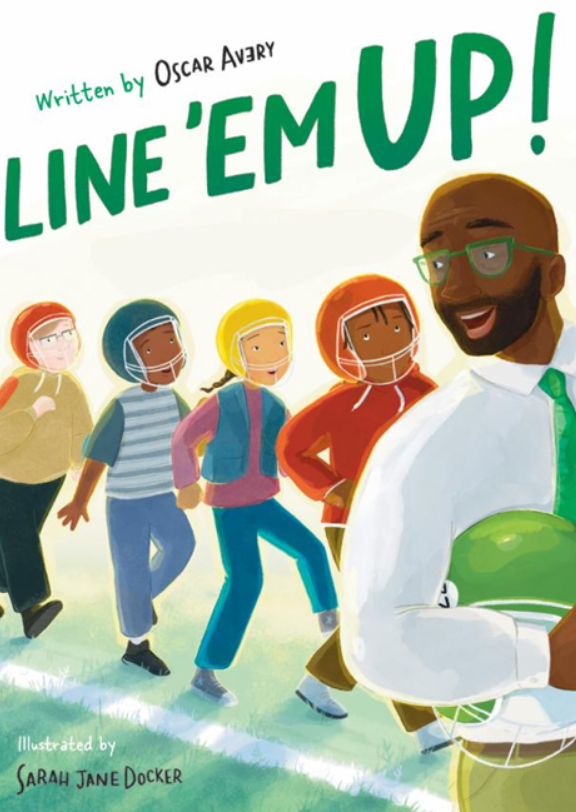
Line ‘Em Up! follows a group of students whose world is changed by a new teacher who shows them how to find the greatness inside themselves. What was the inspiration for the setup of your story?
I was incredibly fortunate to have one of my early stories critiqued by the late James Alan McPherson. He once told me that the most powerful stories are often about ordinary people placed in extraordinary situations. That idea stayed with me, but as a special education teacher, I found myself drawn to the reverse: extraordinary individuals navigating what the world considers ordinary.
My students—many of whom have disabilities—work every day to master skills that others take for granted. Something as simple as forming a straight line can be an enormous triumph. That contrast fascinated me. I wanted to explore the dignity, determination, and quiet heroism embedded in those moments.
So I paired these extraordinary children with a teacher who is extraordinary in a very different way—a former professional football player who once seemed invincible, now facing the realities of chronic traumatic encephalopathy. Placing these two worlds side by side allowed me to explore resilience, vulnerability, and the ways people lift one another up.
Ultimately, I hoped to create a story that resonates because we all know someone who appears larger than life, and we all know someone who faces daily challenges due to disability or illness. Line ’Em Up! brings those experiences together in a way that I hope feels both heartfelt and universal.
Is there anything from your own childhood included in the characters in Line ‘Em Up?
Growing up in Massachusetts in the 1970s, I saw how students in special education were often separated from the rest of the school. I didn’t understand it then, but as I grew older and became a special education teacher, I learned that those classrooms held a wide range of students. Some were there because of genuine cognitive disabilities, while others were placed there due to emotional trauma, unstable home lives, or circumstances far beyond their control.
That understanding shaped the way I think about fairness and equality—two ideas I consider very different. Equality means everyone gets the same thing; fairness means everyone gets what they need. That distinction has guided my teaching and deeply influenced Line ’Em Up!
While none of the characters are based on specific individuals, the emotional truth of the story comes from witnessing how children grow when they’re understood, supported, and included.
The artwork in your book is wonderful. Can you share with us a little about your collaboration with illustrator Sarah Jane Docker?
One of the main reasons I reached out to Sarah Jane Docker is simply because she’s an exceptionally talented illustrator. When I looked through her portfolio, I immediately felt she was the right fit for this story. Her characters didn’t look like the typical, polished industry illustrations you see everywhere—there was warmth, honesty, and a lived‑in quality to her work that felt real.
Representation was also incredibly important to me. According to a 2019 study by the Cooperative Children’s Book Center, only about 3.4% of children’s books feature a main character with a disability. When I saw that Sarah naturally included Black, white, Asian, and disabled characters in her illustrations—not as statements, but as part of the world she creates—I knew she understood the heart of this book. That says a lot about an illustrator.
I also want to highlight the tremendous contribution of our layout artist, Anna Lubecka (and her husband Greg), founder of Banana Bear Books. The collaboration between Sarah and Anna elevated the entire visual experience. Without their combined talents—the illustrations and the thoughtful layout—the artwork wouldn’t resonate with readers in the memorable way it does now.
What were some ideas that were important for you to share in this book?
Several ideas were especially important for me to explore in Line ’Em Up! One is the distinction between fairness and equality—a theme that runs through both my teaching and my writing. Equality means everyone gets the same thing; fairness means everyone gets what they need. That difference matters deeply in classrooms and in life.
I also wanted to play with the contrast between the extraordinary and the ordinary—how children who are often overlooked can show remarkable strength in everyday moments, and how something as simple as forming a straight line can become a powerful act of growth and pride.
And finally, the idea of “Champions” versus “Champeons” is woven into the heart of the story. Readers will understand the meaning once they experience the book, but it speaks to the difference between looking like a champion and truly becoming one.
These themes guided me as I wrote, and I hope they resonate with readers of all ages.
Author Links: Instagram | Email



 LITERARY TITAN